

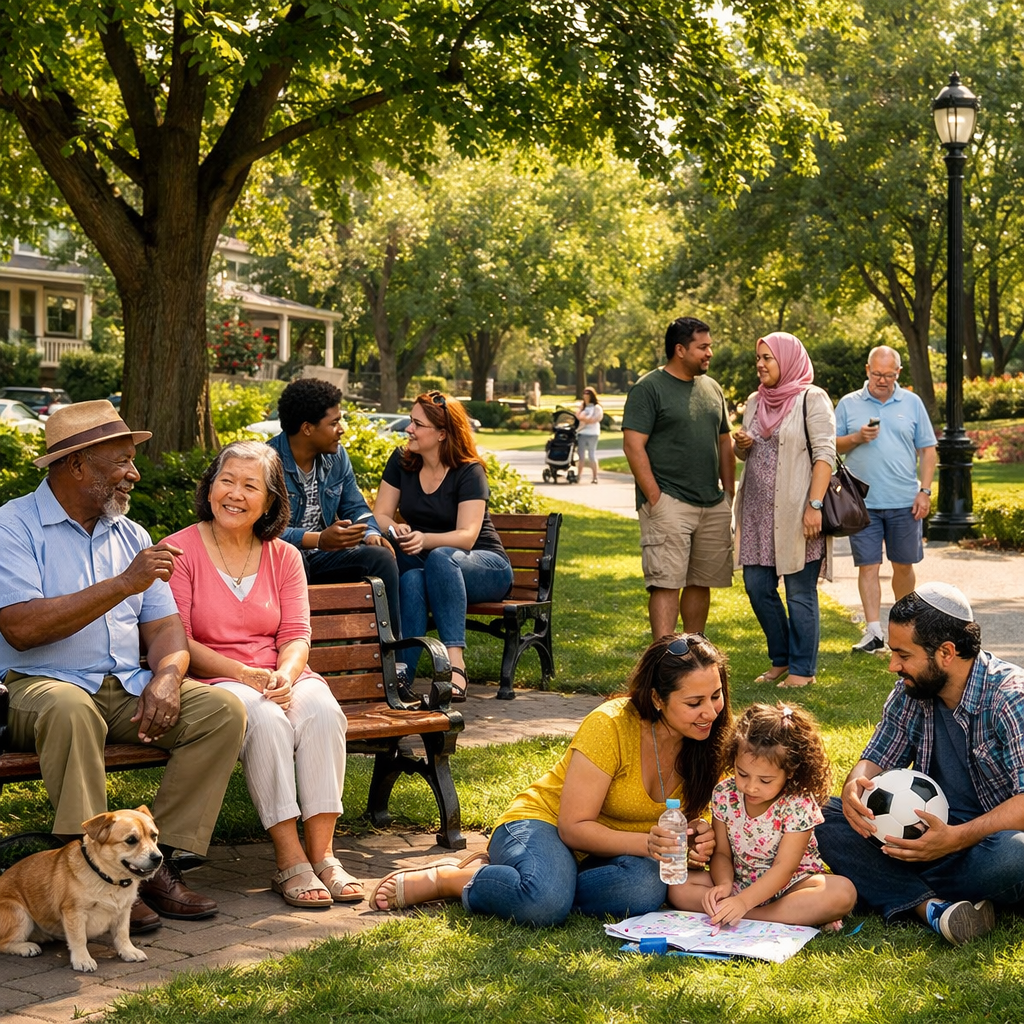
I moved to San Diego over a decade ago and found myself most connected to the city whenever I was in its parks. There’s something about the sound of children playing, people walking their dogs, and old trees rustling in a breeze that grounds you. But not every neighborhood here gets that same sense of place or belonging—and that’s been particularly true in certain parts of the city with fewer trees, fewer playgrounds, and fewer safe spaces to call one’s own.
Why Parks Matter Beyond the Grass
Parks are not just patches of green on a map—they are essential to public health, civic life, and environmental equity. Research from San Diego County shows that just over half of residents had what’s classified as “adequate access” to a park or community space in 2022. This means being close enough and having enough space per household so that parks are truly usable. In many neighborhoods—especially older or denser ones—parks are either too far, too small, or lacking in basic amenities like shade or restrooms.
That lack isn’t just about the physical environment—it’s about opportunity.
Health, Social Life, and Safety
People who live near parks walk more, find places to play outside, and experience less of the isolation that builds when outdoor spaces are unsafe or unseen. Kids thrive in nearby green space; older folks benefit from places to safely move and socialize. Parks can also help with climate-related stress, reducing heat impact in dense neighborhoods through shade and trees. These are the kinds of benefits that ripple out across families, school performance, and mental health.
Where the Gaps Are: Equity in Park Access
“Communities of concern” is a term you’ll hear when talking about areas of San Diego that have experienced historical underinvestment—whether in infrastructure, amenities, or park space itself. These tend to be older, more built-up neighborhoods with lower incomes, fewer green spaces per person, and limited funding for maintenance.
The Parks Master Plan—“Parks for All of Us”—aims to address those disparities by prioritizing investment where the need is greatest: acquiring new park land, upgrading existing parks, improving programming, and ensuring walking, biking, or transit access to public space. Equity is more than a buzzword here—it’s a guiding principle for what many believe is the future of inclusive recreation policy.
Barriers That Still Stand in the Way
- Distance and mobility: Sidewalks, street crossings, and transit options matter when getting from home to park. A park half a mile away is zero use if there’s no safe way to walk there.
- Amenities and quality: A rundown park with no lights, shade, or bathrooms isn’t welcoming. People need clean, safe, and usable facilities.
- Cultural inclusion: Signs, staff, and programming should reflect the community. If people don’t feel welcome or recognized, they often stay away.
- Funding constraints: Land is expensive. Maintenance, staffing, and programming need ongoing support. Many communities that need the most parks get the least resources.
What San Diego Residents Can Do
Everyone—political leaders, community organizers, parents, seniors—can play a part in steering parks toward greater equity.
- Participate in public workshops. The city holds meetings and online forums to gather input for things like the Parks Master Plan.
- Support neighborhood groups pushing for improvements. Sometimes a small shift in local attention or advocacy can unlock funds or change priorities.
- Use the parks you have. Attend events, meet your neighbors there, volunteer for cleanups. The more value the community places on these spaces, the more likely they’ll be cared for.
- Support policies and ballot measures that dedicate funding for parks in underserved neighborhoods.
A Shared Future
Walking through my neighborhood park, I often think about strength: the strength of communities that have persisted despite neglect, the strength in hope that things will get better, and the strength in shared spaces that bring people together. Parks in San Diego have the potential to be beacons—places where equity is natural, where everyone belongs, and where nature and neighborliness grow side by side.